Tree Trimming in Bowling Green, KY
Pruning that makes a tree safer, healthier, and better-shaped without harming it — deadwood taken out, clearance opened over the roof and drive, and structure improved, all of it cut properly rather than hacked back.
Call (270) 780-3310 for a Free Estimate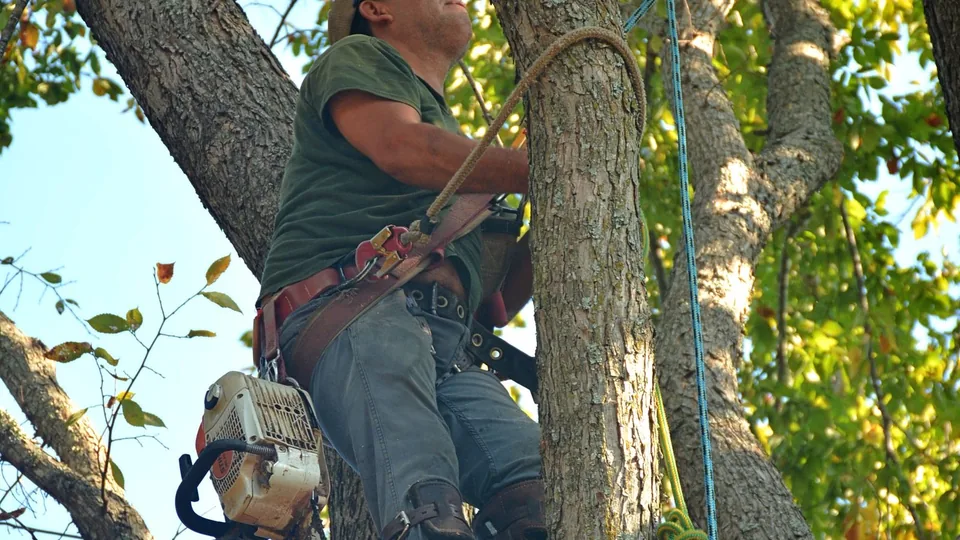
Good pruning and bad pruning look nothing alike a few years later. Done correctly, trimming removes what is dead, crossing, or in the way, opens the canopy just enough, and leaves cuts the tree can seal over — and the tree responds by growing stronger and looking better. Done as a hack job, it strips the canopy, leaves stubs that rot, and triggers a burst of weak regrowth that is more hazardous than what you started with. The difference is entirely in where and how the cuts are made.
That is why trimming is its own craft and stands on equal footing with removal here, not a lesser add-on to it. A tree that is pruned well on a sensible cycle rarely becomes the emergency that needs taking down. Most of what we do on the trimming side is exactly this preventive work: reading a tree, deciding what actually needs to come off, and cutting it cleanly.
The Kinds of Pruning
Most jobs are a mix of a few standard objectives. Crown cleaning removes dead, dying, diseased, and broken branches — the single highest-value prune, because deadwood is what falls. Crown raising lifts the lowest limbs to clear a roof, a driveway, a sidewalk, or sightlines. Crown thinning selectively removes some interior branches to let light and wind pass through, which eases the sail area a storm can push on. Crown reduction shortens the overall spread by cutting back to sound lateral branches, used when a tree has simply outgrown its space.
The right combination comes from the tree and the goal. A young shade tree benefits most from light structural pruning that sets up good form for decades; a mature tree usually needs cleaning and clearance more than shaping. Naming the objective matters, because "just trim it" can mean five different jobs, and the wrong one does real harm.
Why We Never Top a Tree
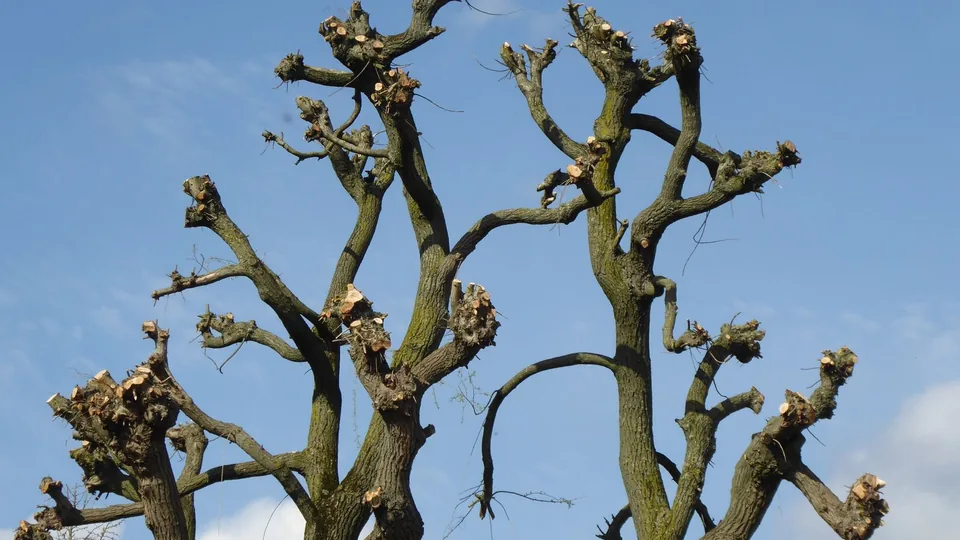
Topping — cutting a tree back to stubs and lopping off the top of the canopy — is the most damaging thing commonly done to trees, and a reputable crew will decline to do it. It removes so much of the leaf area at once that the tree is starved, it exposes bark that evolved under shade to sudden sun and scald, and the large flat cuts almost never seal, so decay walks straight into the trunk. Worst of all, the tree answers by throwing up dense clusters of fast, weakly-attached shoots that are far more likely to break than the limbs that were removed.
So a topped tree is left uglier, sicker, and more dangerous, and it costs more over its life because the regrowth has to be dealt with again and again. When a tree is genuinely too big for its spot, the right tool is a proper crown reduction cut back to living laterals — or, if it truly cannot be made to fit, removal. Topping is neither of those, and we will steer you away from it every time.
How Much, and When
There is a limit to how much living crown should come off in a single year. Removing much more than about a quarter of the live canopy at once stresses a tree, cuts its ability to feed itself, and can push it into decline — so when a tree needs a lot of work, it is staged over more than one season rather than done all at once. More is not better with pruning; the right amount is the least that meets the goal.
Timing matters too. For most hardwoods the best window is the dormant season, roughly November through March, when the leaves are down, the structure is easy to read, and the tree is not spending energy it needs. Dead and clearly hazardous limbs can come out any time, and there are species-specific exceptions — oaks, for instance, are best not pruned in the active growing season because fresh wounds then can invite disease. We prune to the calendar the tree cares about, not just the one that is convenient.
Cuts That Heal
The whole game in pruning is the cut itself. A branch is removed just outside the branch collar — the slightly swollen ring where it joins the trunk — because that collar is where the tree grows the tissue that closes the wound. Cut flush to the trunk and you remove that tissue and leave a wound that will not seal; leave a long stub and it dies back and rots. On anything heavier than a small limb, the branch is undercut first so its weight cannot tear a strip of bark down the trunk as it falls.
We also do not climb a tree we intend to keep on spikes — spurs put a wound in the trunk at every step and have no place on a pruning job. These are not fussy details; they are the difference between a tree that shrugs off a prune and one that is quietly damaged by it. Careful cuts today are why a tree is still sound in twenty years.
If pruning cannot save a tree that is already dead or failing, the honest next step is tree removal — and a good prune before a storm is cheaper than the emergency that a neglected canopy invites.
What’s Included
- Crown cleaning — deadwood, broken, diseased, and crossing limbs removed
- Crown raising for roof, driveway, sidewalk, and sightline clearance
- Crown thinning and reduction cut back to sound lateral branches
- Structural pruning on young trees to build good long-term form
- Proper branch-collar cuts — no topping, no flush cuts, no spikes on kept trees
Why It Matters in Bowling Green
The storms that roll across Warren County put the load on a tree from the side, not the top — straight-line wind and, in winter, ice building on the limbs. A canopy that has been thinned and cleaned lets more of that wind through and carries less deadwood waiting to fall, which is the cheapest hazard reduction there is. Pair that with the shallow, rock-limited rooting common on our karst soils, where anchorage is already the weak point, and keeping a tree light and balanced up top is one of the few things that genuinely lowers the odds of losing it in a storm.
Frequently Asked Questions
When is the best time of year to prune my trees?
For most hardwoods, the dormant season — roughly November through March — is ideal. The leaves are down so the structure is easy to read, and the tree is not spending stored energy. Dead or dangerous limbs can be taken out any time. Some species have their own rules; oaks, for example, are best left unpruned during the active growing season to avoid inviting disease.
What is topping, and why won’t you do it?
Topping is cutting a tree back to stubs to reduce its height. It starves the tree, scalds newly exposed bark, leaves big wounds that rot, and forces weak, fast regrowth that breaks easily — leaving the tree uglier, sicker, and more dangerous. It is never acceptable practice. Where a tree is too tall for its spot, a proper reduction cut to living branches, or removal, is the right answer instead.
How much can you safely trim off at once?
As a rule of thumb, no more than about a quarter of the living crown in a single year. Take more and you stress the tree and can push it into decline. When a tree needs heavy work, we stage it across seasons rather than doing it all at once — with pruning, the right amount is the least that meets the goal.
Will trimming help my tree survive a storm?
It helps. Cleaning out deadwood removes the limbs most likely to fall, and thinning lets wind pass through the canopy instead of pushing on it like a sail. It cannot make any tree stormproof, especially where shallow karst soils limit how well the roots anchor, but a light, balanced, deadwood-free canopy is genuinely less likely to fail.
My tree is blocking the driveway and rubbing the roof. Can you clear it?
Yes — that is crown raising, lifting the lowest limbs to open clearance over a drive, walk, or roof, along with cutting back anything actually touching the house. It is some of the most common work we do, and done with proper cuts it improves the tree at the same time it solves the nuisance.
What does a proper pruning cut look like?
A limb is cut just outside the branch collar, the swollen ring where it meets the trunk, because that is where the tree grows the tissue to seal the wound. No flush cuts into the trunk, no long stubs left to die back, and heavier limbs are undercut first so they cannot peel bark on the way down. On a tree being kept, we never climb on spikes, which wound the trunk.
Other Services
Free Tree Trimming Estimate in Bowling Green
Free, no-obligation estimates across Warren County. Tell us about the tree, the stump, or the storm damage.
Call (270) 780-3310Prefer to send it in writing? Call (270) 780-3310 and we’ll get right back to you.