Stump Grinding in Bowling Green, KY
Grinding out the stump a removal leaves behind — or an old one that has sat for years — below grade so you can reclaim the spot for lawn, a bed, a new tree, or a clean line of sight, with the grindings and roots handled to your plan.
Call (270) 780-3310 for a Free Estimate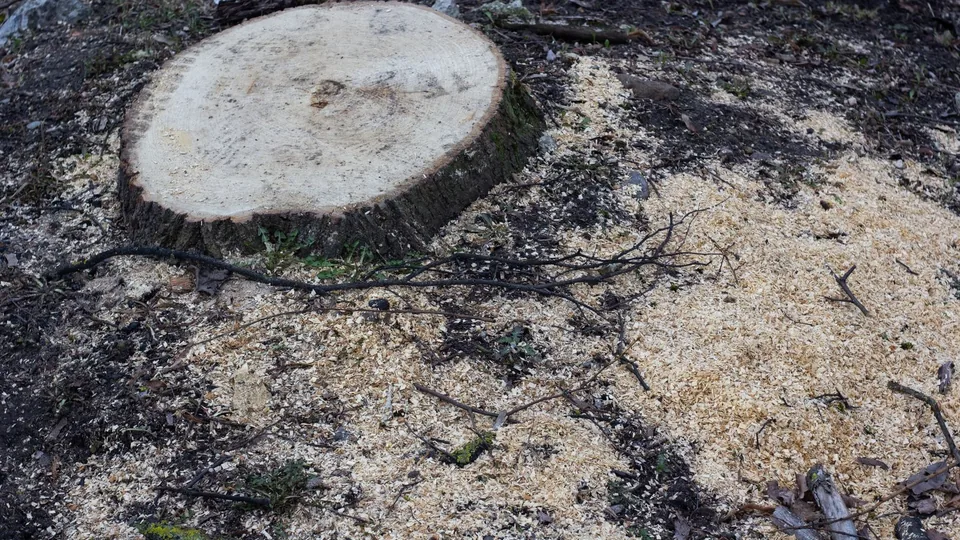
A stump is what is left when the tree is gone, and it rarely leaves on its own — a hardwood stump can sit and slowly rot for a decade, sprouting suckers, feeding fungi, tripping mowers, and holding a chunk of yard hostage the whole time. Grinding turns it into a pile of coarse chips in an afternoon. A rotating cutting wheel studded with teeth chews the wood down in passes, well below the surface, until the stump is gone and the hole can be filled and planted or seeded.
It is worth being clear that this is a distinct service from taking a tree down. Removal and grinding use different machines and different skills, so they are quoted as separate line items — you decide whether to grind at all, and how deep. That keeps the choice yours instead of bundling a cost you may not want.
Grinding Versus Full Removal
Grinding is not the same as excavating the entire root system. The machine reduces the stump and the root flare to chips from the top down, typically several inches to a foot or more below grade — deep enough for the surface to disappear, for a lawn to grow over it, or for most replanting nearby. It does not pull every lateral root out of the ground; those are left to decompose naturally, which they do without trouble in most yards.
Full extraction — physically digging or pulling the stump and major roots out whole — is a bigger, more disruptive, more expensive operation that tears up far more ground, and it is rarely necessary. The main reasons to go that route are a building footprint or hardscape going exactly where the stump sits, or a plan to replant a new tree in the identical spot. For a lawn, a bed, or simply being rid of the eyesore, grinding is the practical answer.
How Deep, and What About the Roots
The right grinding depth follows what the ground is going to become. For turf, a few inches below grade is usually enough to get soil and seed over it. For a new bed or replanting nearby, going deeper — a foot or more — gives roots room and clears the biggest of the old wood. If a fence post, a footing, or a patio is going in, we grind lower still. Tell us the plan for the space and the depth follows from it.
Surface roots that radiate out from the stump can be ground down where they heave a lawn or a walk, within reason — some large structural roots run too far and too deep to chase, and cutting every one is neither practical nor good for nearby trees that may share them. Where roots are only a cosmetic bump, leaving them to rot is often the smarter call than tearing up half the yard.
What the Grinding Leaves Behind
Grinding produces a surprising volume of material — a mound of wood chips and soil noticeably bigger than the stump looked, because ground wood fluffs up. By default that material goes back into the hole, tamped down, and it settles over the following weeks as it breaks down, so a slight crown at first is normal and a topping-up with soil later is common. If you would rather have the grindings hauled off and the hole filled with clean topsoil for immediate seeding, that is an option to say up front.
One thing to know about replanting: wood chips are low in nitrogen as they decompose, so setting a new tree directly into a bed of fresh grindings is not ideal. Where you intend to replant close to the old spot, it is better to remove the chips and bring in soil. We plan the finish around what you want the ground to do next.
Grinding is usually the second half of a tree removal, but we grind standalone stumps just as readily — including old ones left by someone else years ago.
What’s Included
- Fresh stumps left from a removal, ground below grade
- Old and weathered stumps that have sat for years
- Grinding depth set for lawn, beds, replanting, or a building footprint
- Surface roots ground down where they heave turf or walkways, within reason
- Grindings backfilled into the hole or hauled off and replaced with topsoil
Why It Matters in Bowling Green
On the thin soils over limestone common around Warren County, a stump grinder can meet rock or old buried ledge before it reaches textbook depth, and pushing a machine into bedrock helps no one. Part of the on-site read is judging how deep the ground will actually allow and setting a realistic target, rather than promising a depth the site cannot give. It is also worth knowing that some vigorous local species — and stubborn stumps generally — can throw up suckers from roots left in the ground; grinding out the root flare and stump knocks that back, and any strays that appear later are easy to deal with.
Frequently Asked Questions
Is stump grinding included when you remove a tree?
No — it is a separate service on its own line of the estimate. Removal and grinding use different machines and skills, so you decide whether to grind, and how deep, rather than paying for it automatically. Plenty of people do both at once, but the choice stays yours.
How far down do you grind the stump?
It depends on what the spot will become. A few inches below grade is enough for lawn; a foot or more suits a new bed or replanting nearby; lower still if a post or footing is going in. Tell us the plan for the ground and we set the depth to match — allowing for how deep our rocky soils actually let a grinder reach.
Does grinding remove all the roots?
It grinds the stump and root flare below grade and knocks down surface roots that heave a lawn, but it does not pull the entire lateral root system out. Those roots are left to decompose naturally, which they do without issue in most yards. Full root extraction is a bigger, more disruptive job that is only necessary when something is being built on the exact spot.
What happens to all the wood chips?
By default the grindings go back into the hole and settle over a few weeks as they break down, so expect a slight mound at first and possibly a topping-up with soil later. If you would rather, we can haul the chips away and fill with clean topsoil so the spot is ready to seed right away.
Can I plant a new tree where the old one was?
Usually yes, but not straight into fresh grindings — decomposing wood chips pull nitrogen and are poor rooting material. For replanting close to the old spot we grind deeper and swap the chips for soil so the new tree has something good to grow into. If you want the exact same spot, occasionally full extraction makes more sense.
Will the stump grow back after grinding?
The stump itself will not, once the flare is ground out. A few species can send up suckers from roots left in the ground for a while afterward, but those are minor and easy to cut or treat as they appear. Grinding is what ends the stump as an ongoing nuisance.
Other Services
Free Stump Grinding Estimate in Bowling Green
Free, no-obligation estimates across Warren County. Tell us about the tree, the stump, or the storm damage.
Call (270) 780-3310Prefer to send it in writing? Call (270) 780-3310 and we’ll get right back to you.