Tree Removal in Bowling Green, KY
Safe, controlled removal of hazardous, dead, and unwanted trees across Bowling Green and Warren County — from a small yard tree to a large hardwood leaning over a roof, taken down in a way that protects everything around it.
Call (270) 780-3310 for a Free Estimate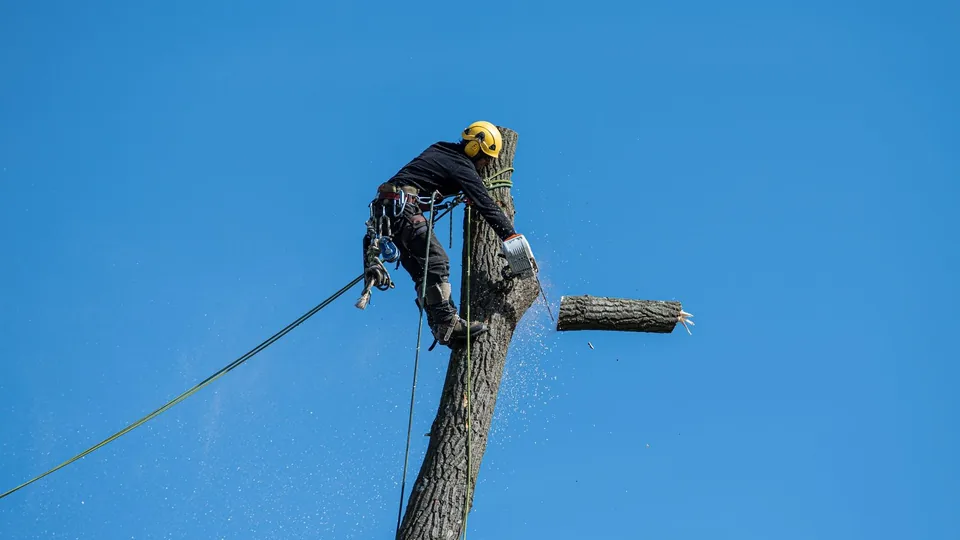
Removing a tree is the last resort, not the first, and a straight answer about whether a tree actually needs to come down is part of the job. Some trees are genuinely dangerous and need to go; many more can be saved with the right pruning or a little patience. When a tree does need to come out, though, the whole task is controlling where the weight goes on the way down — because a tree that fails on its own terms lands where gravity and the wind decide, and a tree that is removed properly lands exactly where the crew intends.
That control is why removal is skilled work rather than a chainsaw and nerve. A big hardwood holds an enormous amount of stored energy in its lean and its limbs, and releasing that energy in the wrong order is how fences, roofs, and people get hurt. The approach is chosen from the tree in front of us — its species, its lean, what has died and what is still sound, and how much room there is to work.
How a Tree Actually Comes Down
When there is open room around the tree and nothing valuable in the fall path, the fastest and safest method is to fell it whole — one controlled cut with a hinge that steers the trunk into a clear drop zone. Most yards in town do not offer that room, so the more common method is a sectional takedown: a climber or an aerial lift works up the tree and removes it in pieces, smallest and highest first, until only a manageable trunk is left to fell.
Where the pieces are heavy and the targets below are unforgiving — a house, a pool, a neighbor a few feet away — the work is rigged. Ropes and friction devices let each cut piece be lowered under control instead of dropped, so nothing hits the ground it should not. On the largest or most awkward removals, a crane lifts whole sections out over the house to a landing area, which is often the safest option precisely when a tree looks impossible to reach. The method follows the hazard; the goal never changes.
Dead Ash and Standing Hazards
A lot of the removals in this area right now are ash trees killed by the emerald ash borer, and dead ash is a category of its own. As it dries it turns brittle fast — limbs that would flex on a living tree snap without warning, and bark sloughs off the trunk a climber would normally rely on. Standing dead ash is genuinely more dangerous to take down than a healthy tree of the same size, and it gets worse the longer it stands, which is the argument for dealing with it sooner rather than later.
The same brittleness applies to any long-dead tree, and to storm-broken trees with cracked trunks or hung-up limbs. These are read carefully before anyone touches them, because the failure that already started is the one most likely to finish at the wrong moment. When a tree is too far gone to climb safely, that is exactly when an aerial lift or a crane earns its place.
Power Lines Are a Separate Trade
A tree touching or growing into a primary electrical line is not a job for a general tree crew or, under any circumstances, a homeowner. Line-clearance work around energized utility conductors is its own specialized trade with its own training, and the right first call for a tree on the power line is the utility itself. We work around the service drop to a house where it is safe to do so and coordinate with the utility when a removal sits close to their lines, but we will tell you plainly when a situation belongs to them.
That honesty extends to the whole job. If a tree can be saved, we would rather prune it than remove it, and if a removal is simpler or cheaper than you feared, that is what you will hear. The point is the right call for the tree and the property, not the biggest invoice.
What Removal Does and Does Not Include
A standard removal takes the tree down and cuts it up, and the debris is hauled away or chipped on site by agreement. What it does not automatically include is the stump. Grinding the stump is a separate task with a separate machine, quoted as its own line item, so you can decide whether to grind it flush, take it deeper for replanting, or leave it — the stump grinding page explains the difference.
It also does not include work that belongs to the utility, and it does not mean tearing up your yard. Where access allows, the aim is to protect the lawn and the beds, keep the work zone tight, and leave the site cleaner than a fallen tree would. On a wooded lot where several trees are coming out at once, that shades into lot clearing, which is planned differently.
Not sure the tree has to go at all? Often the honest answer is a good prune, not a removal — see tree trimming before you decide.
What’s Included
- On-site hazard assessment and a straight recommendation to remove or keep
- Whole-tree felling where there is a clear drop zone
- Sectional dismantling and rigging in tight yards near structures
- Aerial-lift and crane-assisted removals on large or unreachable trees
- Debris chipped on site or hauled away by agreement (stump grinding quoted separately)
Why It Matters in Bowling Green
Warren County sits on karst limestone, and the thin soils over fractured rock give many local trees a shallower, less-anchored root plate than their size suggests. That is a big part of why a mature tree here can lean or heave in saturated ground or a straight-line wind, and why a leaning tree with soil lifting on one side of its base is treated as urgent rather than cosmetic. Add the standing dead ash the borer has left across the county, and there is no shortage of trees that genuinely need to come down — the job is doing it under control.
Frequently Asked Questions
Do I really need to remove this tree, or can it be saved?
Often it can be saved. Deadwood, storm breakage, and even a fair amount of decay can sometimes be managed with pruning and time. Removal is the right call when a tree is dead, structurally failing, leaning with the root plate lifting, or growing somewhere it fundamentally cannot stay. We give you the honest version, including when the answer is to keep it.
Will you grind the stump too?
Grinding is a separate service with a separate machine and its own line on the estimate, so removal and stump grinding are quoted apart. That lets you choose whether to grind flush, go deeper so you can replant, or leave the stump for now. Many people bundle the two, but you are not paying for grinding by default.
A tree is touching the power line — what should I do?
Call your electric utility first. A tree in contact with a primary power line is line-clearance work, which is a specialized trade around energized conductors and is never a do-it-yourself job. We coordinate with the utility and handle what is safe on our side, but the lines themselves belong to them.
Why is a dead ash tree more dangerous to take down?
Emerald ash borer kills ash and the wood then dries and goes brittle quickly. Limbs that would bend on a living tree snap without warning, and the bark a climber relies on lets go. Standing dead ash gets more hazardous the longer it stands, so it is usually best not to wait once an ash has died.
Can you take down a large tree that is right next to my house?
Yes — that is what rigging and, when needed, a crane are for. Instead of felling the tree, a climber or lift removes it in pieces and each piece is lowered on ropes under control, or lifted out whole over the roof by crane. It is slower and more deliberate than dropping a tree in an open field, which is exactly the point near a structure.
Do you clean up after the removal?
Yes. The tree is cut up and the debris is chipped on site or hauled away, whichever you prefer, and the work zone is left tidy. On a lot where several trees are coming out together, we plan the cleanup and haul-off as part of a larger clearing job rather than tree by tree.
Other Services
Free Tree Removal Estimate in Bowling Green
Free, no-obligation estimates across Warren County. Tell us about the tree, the stump, or the storm damage.
Call (270) 780-3310Prefer to send it in writing? Call (270) 780-3310 and we’ll get right back to you.